
OCR A A-Level Biology Tutor — Expert Online Tuition for the H420 Specification
Specialist OCR A A-Level Biology tuition from Tyrone — a Chartered Biologist and former WJEC/Eduqas & Edexcel examiner with over 25 years of teaching experience. OCR A Biology is known for its academic rigour and challenging application questions — I teach you how to approach them with confidence and earn every available mark.
Last updated: February 2026
Proven Results: What Students and Parents Say
I have a 100% grade improvement rate. With all 5-star reviews on Trustpilot and Google, my students consistently achieve grades above their predicted results.
WORDPRESS SHORTCODE GOES HERE
Google ★★★★★8 reviews Trustpilot ★★★★☆11 reviews Google ★★★★★Wow what a great tutor supported my daughter to understand the depth of A level Biology improving exam results from 50% to 87%, i highly recommend Tyrones tailored approach to learning it certainly yields results
 Trustpilot ★★★★★Having had several A-level biology…Having had several A-level biology tutors before, none matched Tyrone's ability to deepen my understanding of the material. His dedication to ensuring his students excel is remarkable, and his strategic planning has perfectly equipped me to secure top marks in class. Tyrone's extensive teaching expe...
 Google ★★★★★Tyrone was a great tutor and increased our son’s confidence in tackling the A’level biology exams so that he ended up getting a higher grade than he’d been predicted. It was easy to book tutor appointments, with plenty of availability. Would definitely recommend Tyrone.
 Google ★★★★★Choosing a tutor is a big decision. We struggled to find the 'right' biology A level tutor for our daughter. There is a big difference between tutors who can teach/reinforce content and tutors who can teach your student to dissect an exam question, allocate the marks and get the marks every time... ...
 Google ★★★★★The best biology tutor, if you are trying to do well in your studies, make sure to give Tyrone the time of day, amazing person, extremely patient and very good at making you understand. I’m a pretty hard person to leach cause I’m real lazy so I promise you he’s really good.
 Google ★★★★★Tyrone was an amazing tutor, who helped me so much with A Level Biology when I was struggling with the content in Y13. I liked the way that he explained each topic thoroughly, at a good pace and he always asked me if I had any questions before continuing to teach me, as I felt that the way that the ...
Replace this entire div with the shortcode above in a WordPress Shortcode block
In just 8 months — secured first choice university
Over 2 years of consistent tuition
In just 3 months of focused tutoring
Meet Your OCR A Biology Tutor: Tyrone

Qualifications and Background
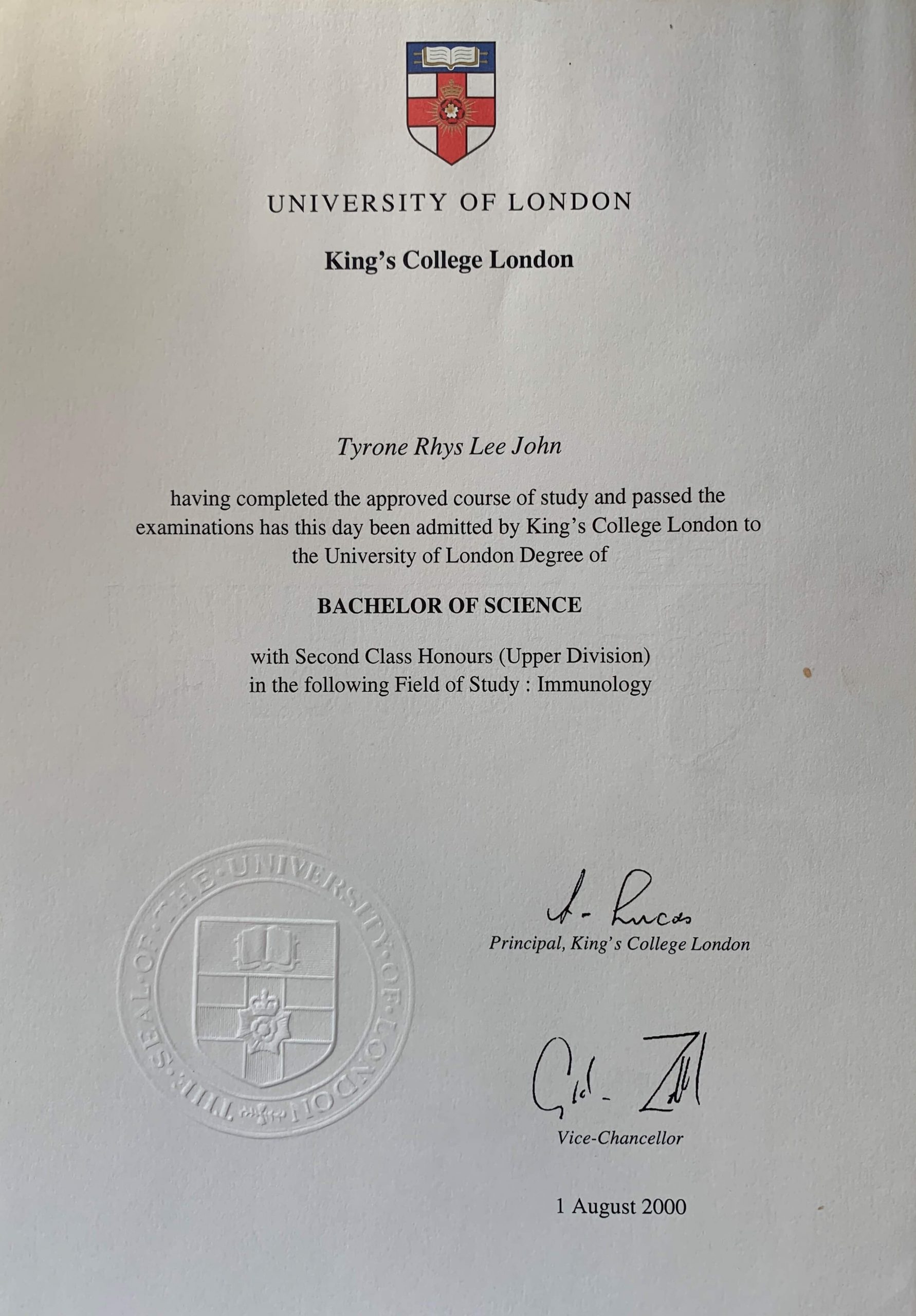
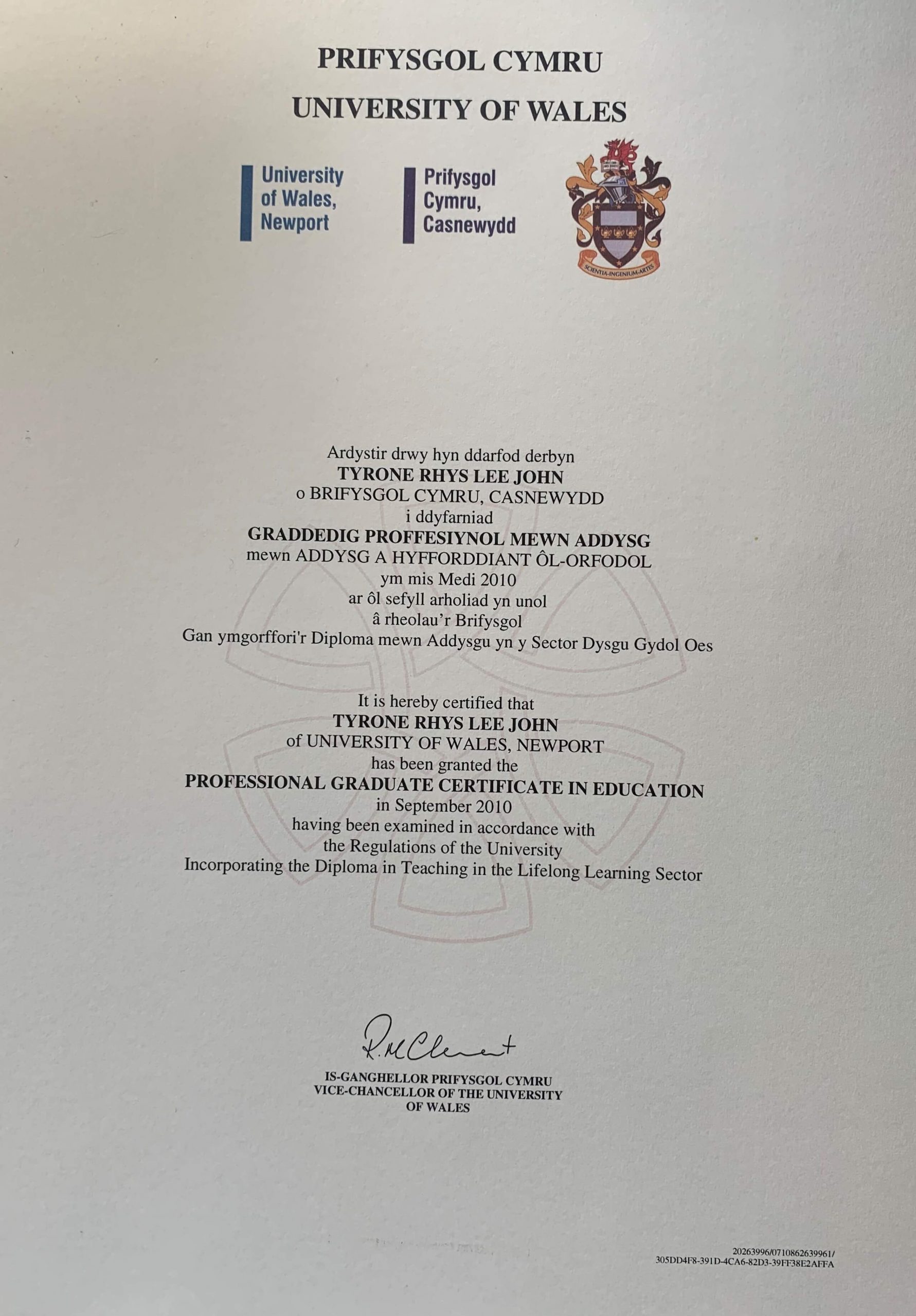
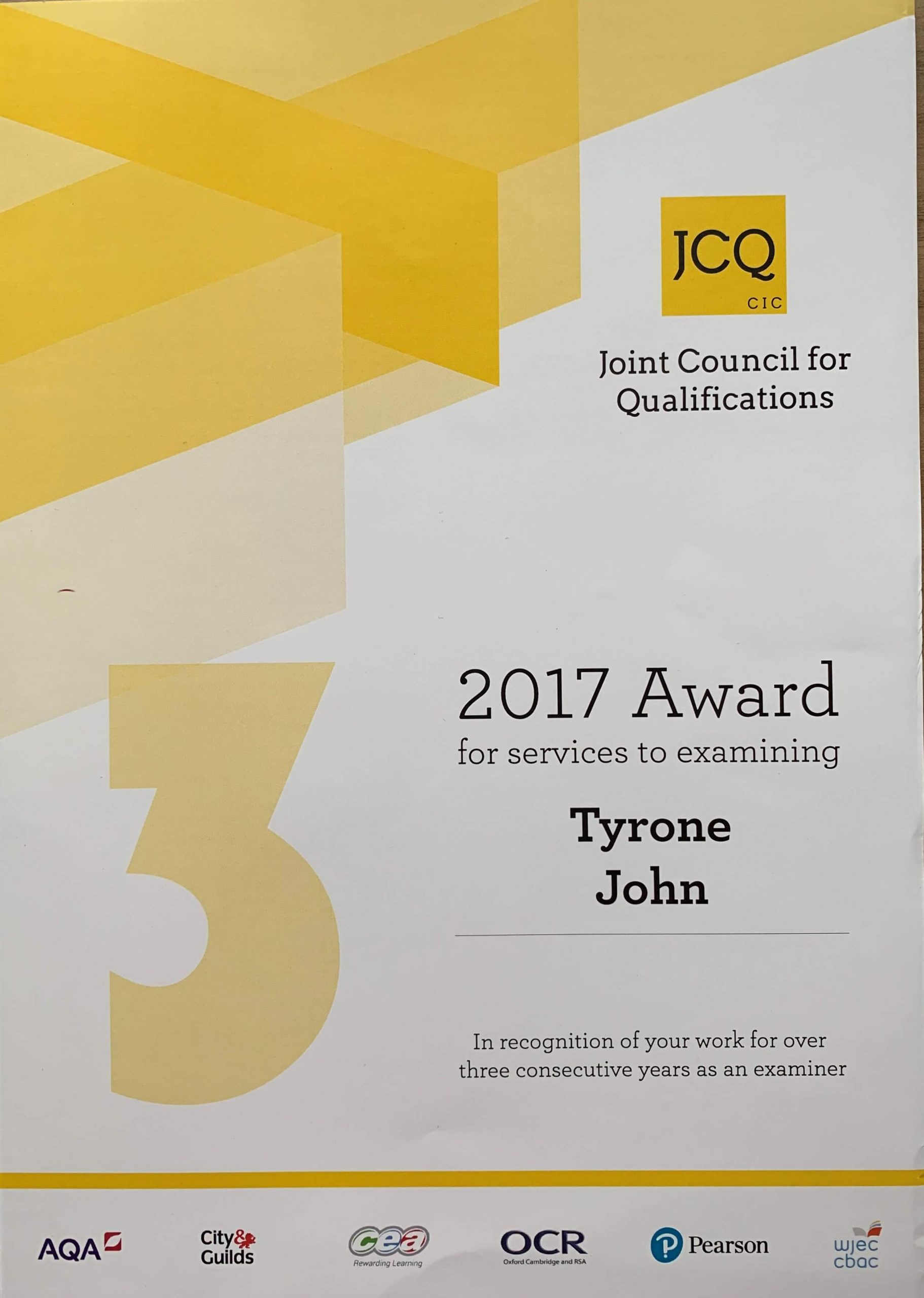
Official OCR A A-Level Biology Resources
I always encourage my students to use the official OCR resources alongside our tuition sessions. These are the key links you will need throughout your course:
📋 OCR A H420 Specification
The full A-Level Biology A specification — your definitive guide to what can and cannot be examined.
View Specification →📝 Past Papers & Mark Schemes
Official past papers, mark schemes and examiner reports. Use OCR’s ExamBuilder tool to create custom practice papers by topic.
View Past Papers →📊 OCR Biology A Subject Page
The main OCR Biology A hub with teaching resources, delivery guides, and specification updates.
Visit OCR Biology A →How I Help OCR A Biology Students
Every student is different, so every tutoring programme is personalised. OCR A Biology demands deep understanding and the ability to apply knowledge to unfamiliar situations — my approach is designed to build exactly those skills.
Specification-Focused Teaching
I teach specifically to the OCR A H420 specification. Every concept, example, and practice question is directly relevant to your exams — nothing is wasted.
Exam Technique Training
As a former examiner, I know how mark schemes work. I teach you the specific phrases, structures, and approaches that consistently earn full marks on OCR A question types.
Past Paper Practice
We work through real OCR A past papers together, with detailed feedback using actual mark schemes. I explain not just what the correct answer is, but why other answers lose marks.
Application & Synoptic Skills
OCR A is renowned for testing application in unfamiliar contexts. I teach you how to break down these questions systematically so you are never caught off guard in the exam.
Tuition Options
One-to-One Tuition
Individual sessions typically lasting one hour, tailored entirely to your needs. Ideal for focused, personalised attention on the OCR A topics and exam techniques that matter most to you.
Learn more →Small Group Tuition
Study alongside 2–8 other students. A cost-effective option if you enjoy collaborative learning and benefit from hearing different questions and perspectives.
Learn more →What Makes OCR A A-Level Biology Challenging
OCR A Biology is widely regarded as one of the more academically demanding A-Level Biology specifications. It emphasises deep understanding over surface-level recall, and the exam questions frequently present familiar concepts in unfamiliar contexts. This is exactly what makes it challenging — but also what makes specialist tuition so valuable.
Common Struggles I Help OCR A Students Overcome
Paper 3: Unified Biology (Synoptic)
The synoptic paper tests all content from across the specification with a greater emphasis on analysis, interpretation and evaluation (AO3). Many students struggle to make connections between modules and to apply knowledge to unfamiliar experimental scenarios.
Application Questions in Unfamiliar Contexts
OCR A is renowned for presenting familiar biology in unfamiliar situations. Students who rely on memorisation alone often struggle with these questions. I teach you a systematic approach to breaking them down.
Extended Response Questions
OCR A uses level-of-response marking for extended answers. This means your answer is assessed holistically against descriptors for each level. I teach you how to structure responses that consistently hit the top level.
Mathematical Skills (10% of the Exam)
OCR A requires Level 2 mathematical skills including statistical tests, logarithms, and calculations involving ratios and percentages. I help students who find the maths challenging build confidence.
Practical Skills (15% of Written Papers)
At least 15% of the marks across all three papers test practical knowledge. Understanding experimental design, variables, data analysis, and evaluation is essential — not just knowing the method.
Understanding the OCR A A-Level Biology Exam Structure
OCR A A-Level Biology (H420) is a linear qualification — all three papers are sat at the end of Year 13. There is also a separately reported Practical Endorsement.
Paper 1 — Biological Processes (37%)
Duration: 2 hours 15 minutes | Marks: 100 | Content: Modules 1, 2, 3 and 5
Section A: 15 multiple choice questions. Section B: structured questions and extended response. Covers foundations in biology, biological molecules, exchange and transport, and communication, homeostasis and energy.
Paper 2 — Biological Diversity (37%)
Duration: 2 hours 15 minutes | Marks: 100 | Content: Modules 1, 2, 4 and 6
Section A: 15 multiple choice questions. Section B: structured questions and extended response. Covers foundations in biology, biological molecules, biodiversity evolution and disease, and genetics evolution and ecosystems.
Paper 3 — Unified Biology (26%)
Duration: 1 hour 30 minutes | Marks: 70 | Content: All modules (1–6)
Structured questions and extended response drawing on content from across the entire specification. Has a greater emphasis on AO3 (analyse, interpret and evaluate) than Papers 1 and 2. This is the synoptic paper.
Practical Endorsement (Reported Separately)
Teacher-assessed practical skills reported as Pass or Not Classified on your A-Level certificate. While it does not contribute to your grade, it is an important requirement for many university courses. Practical skills are also assessed across all three written papers.
For the full specification, visit the official OCR A-Level Biology A (H420) specification page.
The 6 OCR A A-Level Biology Modules I Cover
I cover every module in the OCR A H420 specification, tailoring each session to the areas where you need the most help:
Module 1: Development of Practical Skills in Biology
Planning, implementing, analysis and evaluation of practical work. These skills are assessed across all three written papers and through the Practical Endorsement.
Module 2: Foundations in Biology
Cell structure, biological molecules, nucleic acids, and enzymes. Foundation knowledge that underpins the entire course — getting this right early is critical.
Module 3: Exchange and Transport
Exchange surfaces, transport in animals (circulatory system, haemoglobin), and transport in plants (xylem, phloem). Questions often link structure to function.
Module 4: Biodiversity, Evolution and Disease
Communicable diseases, the immune system, biodiversity, classification, and evolution. A content-heavy module with many opportunities for application questions.
Module 5: Communication, Homeostasis and Energy
Neuronal communication, hormonal communication, homeostasis, excretion, photosynthesis, and respiration. Often cited as the most challenging module — the biochemistry of respiration and photosynthesis is where many students struggle most.
Module 6: Genetics, Evolution and Ecosystems
Cellular control, patterns of inheritance, manipulating genomes, cloning and biotechnology, ecosystems, and populations. Includes challenging genetics problems and statistical analysis.
For past papers, mark schemes and examiner reports, visit the OCR A Biology assessment resources page.
I Also Cover Other Exam Boards
Not studying OCR A? I cover all major UK and international A-Level Biology specifications. Click below to find your exam board:
Ready to Improve Your OCR A Biology Grade?
Book a free 20-minute consultation — no obligation, just an honest conversation about how I can help you.
Book Free ConsultationFrequently Asked Questions About OCR A Biology Tuition
Yes. I have taught the OCR A H420 specification and have a thorough understanding of all 6 modules, the practical endorsement requirements, and the exam structure including the synoptic Unified Biology paper. I teach specifically to the OCR A mark schemes so my students know exactly what examiners expect.
Paper 3 (Unified Biology) is the synoptic paper that draws on content from across the entire specification. It has a greater emphasis on analysis, interpretation and evaluation (AO3). I teach students how to make connections between different modules, how to approach unfamiliar data and experimental scenarios, and how to write extended responses that hit every mark scheme point.
Yes. While the practical endorsement is assessed by your school, practical skills are also tested across all three written papers — at least 15% of the total marks. I make sure my students understand experimental design, data analysis, and evaluation techniques that are essential for both the practical endorsement and the exam questions.
OCR A Biology is known for its academic rigour and challenging application questions. The specification emphasises deep understanding over surface-level recall, and the exam questions frequently present familiar concepts in unfamiliar contexts. Many students find this more demanding than other boards, which is why specialist tuition can make such a difference. With the right exam technique, OCR A is very manageable.
I have a 100% grade improvement rate across all exam boards. My students consistently achieve grades above their predicted results. You can read testimonials from students and parents on my testimonials page.
One-to-one tuition is £80 per hour Monday to Friday and £120 per hour at weekends. Small group tuition is £50 per hour per student Monday to Friday and £80 per hour at weekends, with a minimum of 4 students per group. Please see my charges page for full details.
Disclaimer: The information provided on this page is intended for educational guidance only. While every effort has been made to ensure accuracy, Biology Education and its author accept no responsibility for individual exam outcomes. Students are advised to consult their own teachers, tutors, and official OCR resources as part of their revision.
Trademark Acknowledgement: OCR is a registered trademark of Cambridge University Press & Assessment. Biology Education is not affiliated with, endorsed by, or formally associated with OCR. For official past papers, mark schemes and specimen materials, please visit ocr.org.uk.