
OCR B A-Level Biology Tutor — Online Advancing Biology (H422) Specialist
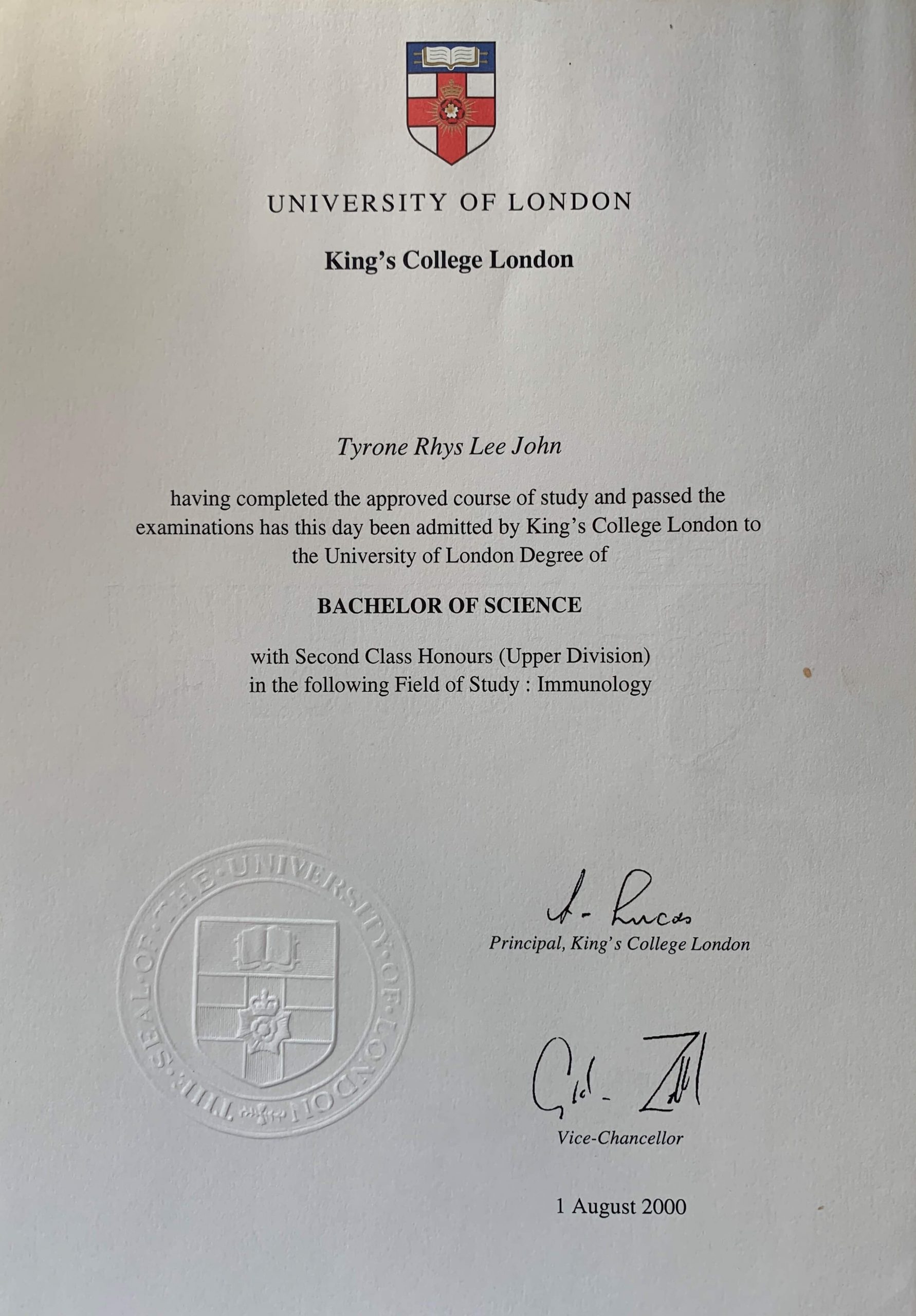
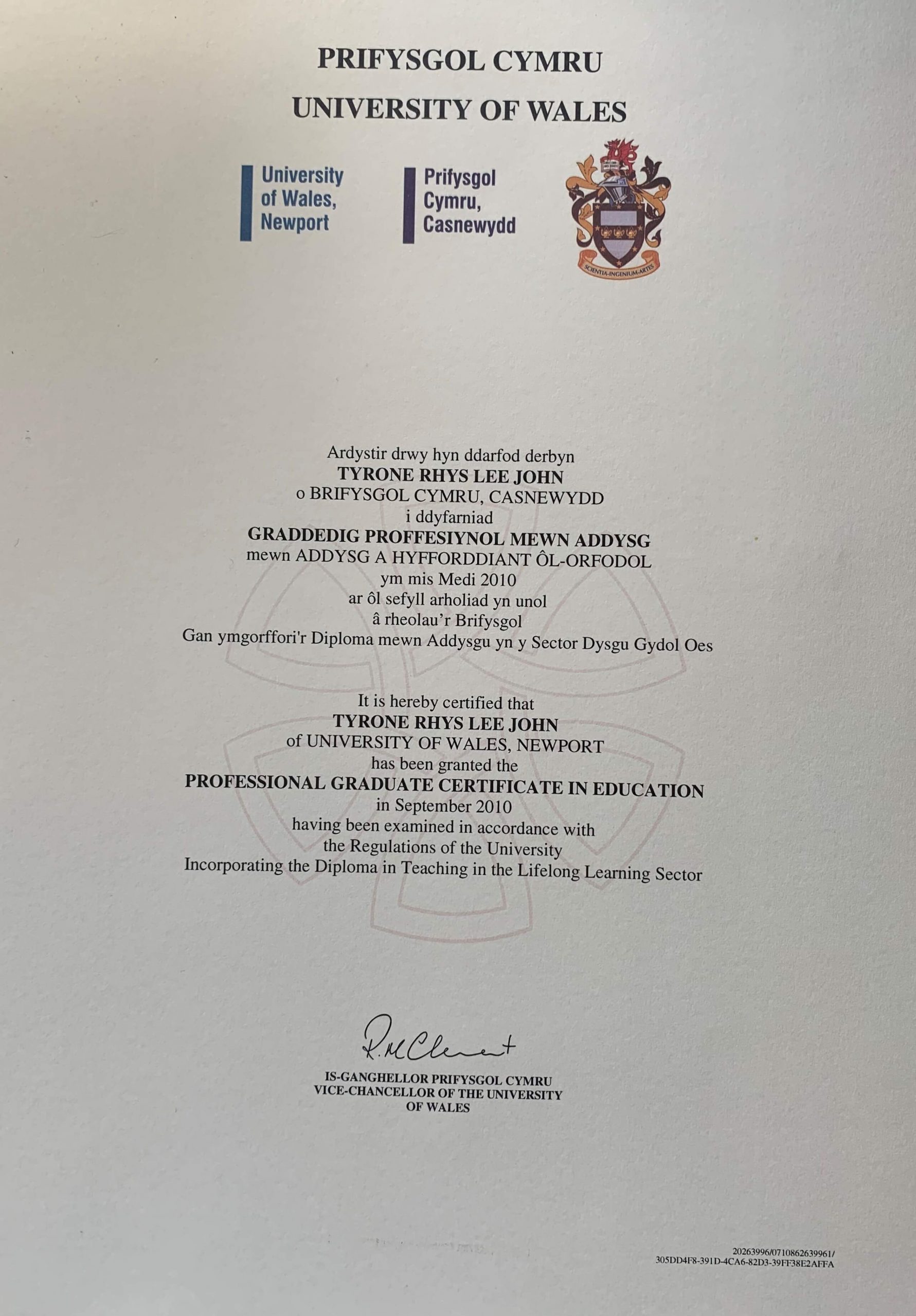
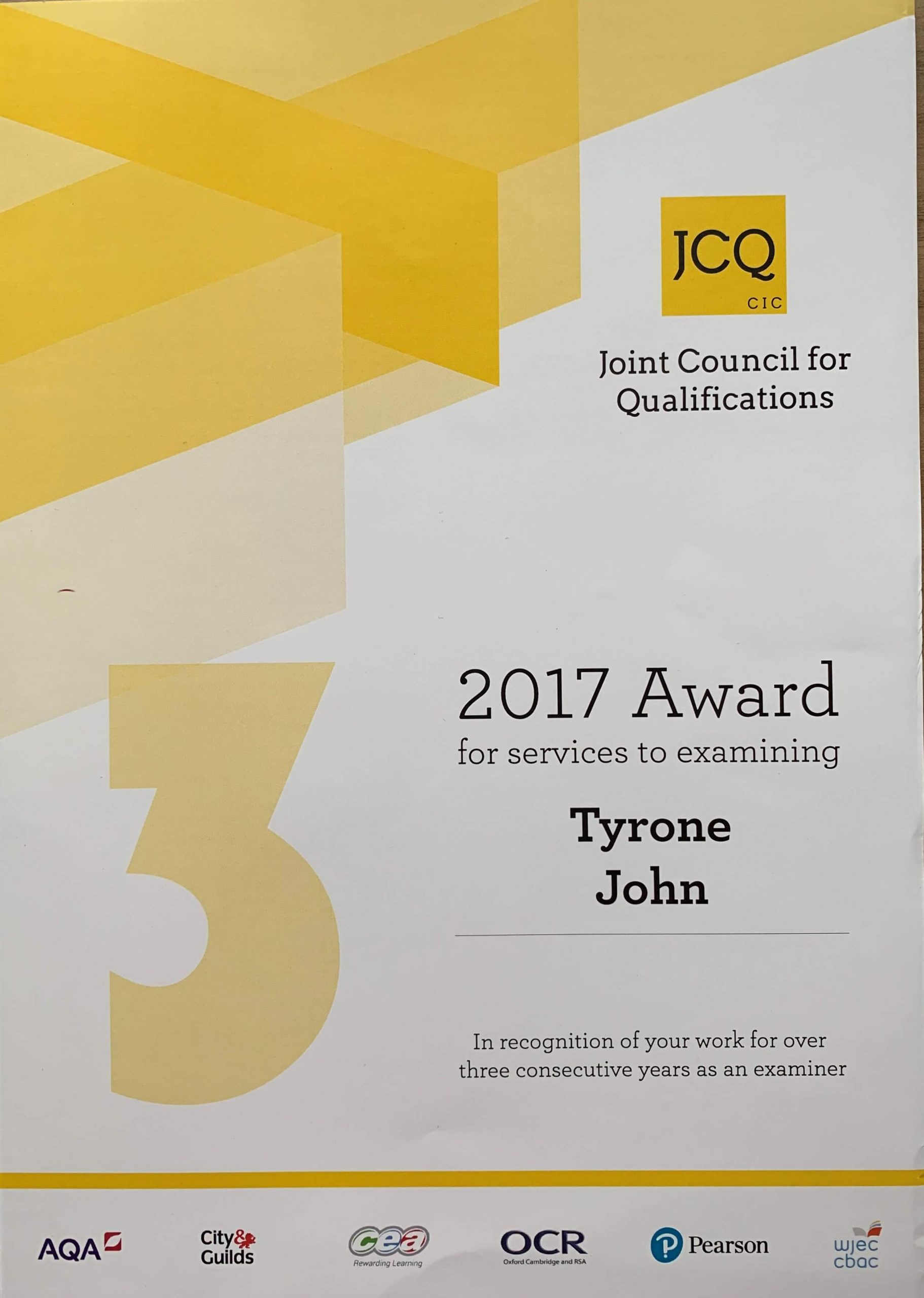
I am Tyrone — a Chartered Biologist and former A-Level examiner with over 25 years of teaching experience. I provide specialist online tuition for OCR B A-Level Biology — Advancing Biology (H422), covering all 3 written papers, all 5 modules, the Scientific Literacy paper with its Advance Notice article, and the Practical Skills paper. Whether you need help with the context-based approach, exam technique, or specific modules, I can help you achieve your target grade.
Last updated: February 2026
Proven Results: What Students and Parents Say
I have a 100% grade improvement rate. With all 5-star reviews on Trustpilot and Google, my students consistently achieve grades above their predicted results.
WORDPRESS SHORTCODE GOES HERE
Google ★★★★★8 reviews Trustpilot ★★★★☆11 reviews Google ★★★★★Wow what a great tutor supported my daughter to understand the depth of A level Biology improving exam results from 50% to 87%, i highly recommend Tyrones tailored approach to learning it certainly yields results
 Trustpilot ★★★★★Having had several A-level biology…Having had several A-level biology tutors before, none matched Tyrone's ability to deepen my understanding of the material. His dedication to ensuring his students excel is remarkable, and his strategic planning has perfectly equipped me to secure top marks in class. Tyrone's extensive teaching expe...
 Google ★★★★★Tyrone was a great tutor and increased our son’s confidence in tackling the A’level biology exams so that he ended up getting a higher grade than he’d been predicted. It was easy to book tutor appointments, with plenty of availability. Would definitely recommend Tyrone.
 Google ★★★★★Choosing a tutor is a big decision. We struggled to find the 'right' biology A level tutor for our daughter. There is a big difference between tutors who can teach/reinforce content and tutors who can teach your student to dissect an exam question, allocate the marks and get the marks every time... ...
 Google ★★★★★The best biology tutor, if you are trying to do well in your studies, make sure to give Tyrone the time of day, amazing person, extremely patient and very good at making you understand. I’m a pretty hard person to leach cause I’m real lazy so I promise you he’s really good.
 Google ★★★★★Tyrone was an amazing tutor, who helped me so much with A Level Biology when I was struggling with the content in Y13. I liked the way that he explained each topic thoroughly, at a good pace and he always asked me if I had any questions before continuing to teach me, as I felt that the way that the ...
In just 8 months — secured first choice university
Over 2 years of consistent tuition
In just 3 months of focused tutoring
Meet Your OCR B Advancing Biology Tutor: Tyrone

How I Help OCR B Advancing Biology Students
OCR B Advancing Biology uses a distinctive context-based approach that requires a different skill set from traditional topic-based specifications. I tailor my teaching to address the specific challenges that OCR B students face.
Context-Based Question Mastery
OCR B presents biological concepts through real-world contexts — you need to extract and apply your knowledge within unfamiliar scenarios. I train you to identify the underlying biology in context-based questions and write answers that earn full marks.
Scientific Literacy Paper Preparation
Paper 2 includes an Advance Notice article that you receive before the exam. I teach you how to analyse scientific articles effectively, identify key biological principles within them, and prepare for the types of questions examiners will ask about the article.
Past Paper Practice
We work through real OCR B past papers together, with detailed feedback using actual mark schemes. I explain not just what the correct answer is, but why other answers lose marks — building the exam technique that earns top grades in context-based papers.
Practical Skills Paper Preparation
Paper 3 tests practical skills through written questions. I prepare students thoroughly by working through past practical papers, teaching experimental design, data analysis, and evaluation techniques that OCR examiners expect.
Tuition Options
One-to-One Tuition
Individual sessions typically lasting one hour, tailored entirely to your needs. Ideal for focused, personalised attention on the OCR B modules and exam techniques that matter most to you. One-to-one tuition is £80 per hour Monday to Friday and £120 at weekends.
Learn more →Small Group Tuition
Study alongside 2–8 other students. A cost-effective option if you enjoy collaborative learning and benefit from hearing different questions and perspectives. Group tuition is £50 per hour per student Monday to Friday and £80 at weekends.
Learn more →What Makes OCR B Advancing Biology Different?
OCR B Advancing Biology (H422) takes a fundamentally different approach from other A-Level Biology specifications. Understanding these differences is essential for exam success.
Context-Based Learning
Unlike traditional specifications that teach topics in isolation, OCR B introduces biological concepts through real-world contexts. For example, you study cell structure through the context of blood cells, and genetics through the context of inherited disease. This means exam questions test your ability to apply knowledge in unfamiliar situations, not just recall facts.
The Advance Notice Article (Paper 2)
Paper 2 — Scientific Literacy in Biology — includes an article released to students before the exam. You must read, analyse, and apply biological knowledge to the content of this article during the exam. This is unique to OCR B and requires specific preparation skills that I teach.
Scientific Literacy Focus
OCR B places greater emphasis on scientific literacy than other specifications. You are expected to evaluate evidence, assess the validity of scientific claims, and understand how science works in practice. Paper 2 specifically tests these higher-order skills.
Practical Skills as a Separate Paper
Paper 3 is dedicated entirely to practical skills — worth 22% of the A-Level. This is assessed through written questions about experimental design, data analysis, and evaluation, not a hands-on practical exam.
Cross-Module Synoptic Assessment
All three written papers can assess content from any of the five modules. This means you must be able to link ideas across different areas of biology — connecting cellular processes to whole-organism function, linking genetics to evolution, and relating practical skills to theoretical understanding.
Understanding the OCR B Advancing Biology Exam Structure
OCR B A-Level Biology (H422) uses 3 written papers plus a Practical Endorsement. All three written papers can assess content from all five modules.
Written Papers
Paper 1 — Fundamentals of Biology (41% of A-Level)
Duration: 2 hours 15 minutes | Marks: 110 | Content: All modules (1–5)
The highest-weighted paper. Tests knowledge, understanding, and application across all five modules. Includes structured questions, short answer questions, and extended response questions. This paper assesses your core biological knowledge and your ability to apply it.
Paper 2 — Scientific Literacy in Biology (37% of A-Level)
Duration: 2 hours 15 minutes | Marks: 100 | Content: All modules (1–5) + Advance Notice article
This paper is unique to OCR B. It includes questions based on an Advance Notice article — a scientific article released to you before the exam. You must analyse the article, apply your biological knowledge to it, and evaluate scientific claims. Also includes questions not related to the article that test scientific literacy across all modules.
Paper 3 — Practical Skills in Biology (22% of A-Level)
Duration: 1 hour 30 minutes | Marks: 60 | Content: Practical skills from all modules
Tests practical skills through written questions. You must demonstrate understanding of experimental design, data collection, data analysis, and evaluation. Questions may be based on practical contexts you have not encountered before.
Component 04 — Practical Endorsement (Reported Separately)
A non-exam assessment completed at your school or college. You must demonstrate competency in a minimum of 12 assessed practical activities covering the Common Practical Assessment Criteria (CPAC). This is reported as a pass or fail alongside your A-Level grade.
For the full syllabus, visit the official OCR B Biology (Advancing Biology) H422 page.
OCR B Advancing Biology Modules I Cover
I cover all 5 modules across the full OCR B Advancing Biology specification:
Module 1 — Development of Practical Skills in Biology
Planning experiments, implementing procedures, analysis and evaluation of results, and mathematical skills in biology. These practical skills are assessed throughout all three written papers and through the Practical Endorsement.
Module 2 — Cells, Chemicals for Life, Transport and Gas Exchange
Cell structure and function (studied through the context of blood), biological molecules, cell membranes, transport mechanisms, the circulatory system, and gas exchange. This module establishes the fundamental building blocks of biology.
Module 3 — Cell Division, Development and Disease Control
The cell cycle, mitosis and meiosis, stem cells and cellular differentiation, the immune system, infectious diseases, and vaccination. Includes the biology of disease prevention and control.
Module 4 — Energy, Reproduction and Populations
Photosynthesis, respiration, energy transfer through ecosystems, reproduction (sexual and asexual), population ecology, and evolution by natural selection. Covers both cellular energetics and whole-organism biology.
Module 5 — Genetics, Control and Homeostasis
Genetics and inheritance, gene expression and regulation, genetic technology, neural and hormonal communication, homeostasis, and the control of gene expression. This module covers the most challenging A2-level content.
Official OCR B Advancing Biology Resources
I always encourage my students to use the official OCR resources alongside our tuition sessions:
📋 H422 Specification
The full OCR B A-Level Biology (Advancing Biology) specification — your definitive guide to what can and cannot be examined.
View Specification →📝 Past Papers & Mark Schemes
Official OCR B past papers, mark schemes and examiner reports for all 3 written papers — essential for exam preparation.
View Past Papers →📊 ExamBuilder
OCR’s free online tool that lets you create custom practice papers from real past paper questions, filtered by topic and difficulty.
Use ExamBuilder →OCR A vs OCR B — Which Specification Are You On?
OCR offers two A-Level Biology specifications. It is important to know which one your school follows, as the exam papers and approach are different:
OCR A — Biology A (H420)
A traditional topic-based specification. Content is organised into six modules covering distinct areas of biology. Assessment is through three written papers: Biological Processes, Biological Diversity, and Unified Biology. This is the more widely used OCR specification.
OCR A page →OCR B — Advancing Biology (H422)
A context-based specification. Biological concepts are taught through real-world scenarios. Assessment includes the unique Scientific Literacy paper with an Advance Notice article. Content is organised into five modules. This is the specification covered on this page.
I Also Cover Other Exam Boards
Studying a different specification? I cover all major UK and international A-Level Biology exam boards:
Ready to Improve Your OCR B Advancing Biology Grade?
Book a free 20-minute consultation — no obligation, just an honest conversation about how I can help you succeed with the H422 specification.
Book Free ConsultationFrequently Asked Questions About OCR B Advancing Biology Tuition
OCR A (H420) takes a traditional topic-based approach where modules cover distinct areas of biology. OCR B Advancing Biology (H422) uses a context-based approach where biological concepts are introduced through real-world scenarios. Both cover similar core content but the teaching approach and exam paper structure differ significantly. OCR B has a unique Scientific Literacy paper that includes an Advance Notice article released before the exam.
OCR B has three written papers plus a Practical Endorsement. Paper 1 (Fundamentals of Biology) is worth 41% — 110 marks in 2 hours 15 minutes. Paper 2 (Scientific Literacy in Biology) is worth 37% — 100 marks in 2 hours 15 minutes. Paper 3 (Practical Skills in Biology) is worth 22% — 60 marks in 1 hour 30 minutes. The Practical Endorsement is reported separately as a pass or fail. All three written papers can assess content from all five modules.
The Advance Notice article is a scientific article released to students before the Paper 2 exam. During the exam, questions are based partly on this article. You need to read, analyse, and apply your biological knowledge to the content of the article. I help students develop the skills to effectively analyse unfamiliar scientific texts and prepare for the types of questions examiners will ask.
Yes. I am a Chartered Biologist and former A-Level Biology examiner with over 25 years of teaching experience. I cover all A-Level Biology specifications including OCR B Advancing Biology (H422). I understand the context-based approach that OCR B uses and the specific demands of papers like the Scientific Literacy exam with its Advance Notice article.
One-to-one tuition is £80 per hour Monday to Friday and £120 per hour at weekends. Small group tuition is £50 per hour per student Monday to Friday and £80 per hour at weekends, with a minimum of 4 students per group. Please see my charges page for full details.
The Practical Endorsement (Component 04) is assessed by your school or college as a pass or fail — it is not something I can directly assess. However, I help students prepare thoroughly for Paper 3 (Practical Skills in Biology) which tests practical skills through written questions worth 22% of the A-Level. I also build practical understanding throughout all our sessions so you are well prepared for both the written paper and the endorsement.
Disclaimer: The information provided on this page is intended for educational guidance only. While every effort has been made to ensure accuracy, Biology Education and its author accept no responsibility for individual exam outcomes. Students are advised to consult their own teachers, tutors, and official OCR resources as part of their revision.
Trademark Acknowledgement: OCR and Cambridge Assessment are trademarks of Cambridge University Press & Assessment. Biology Education is not affiliated with, endorsed by, or formally associated with Cambridge University Press & Assessment or OCR. For official past papers, mark schemes and specimen materials, please visit ocr.org.uk.